Signs Your Sewer Line Needs Attention in East Texas
Most sewer problems announce themselves long before the backup, if you know what to listen and smell for.
October 8, 2026 · 4 min read
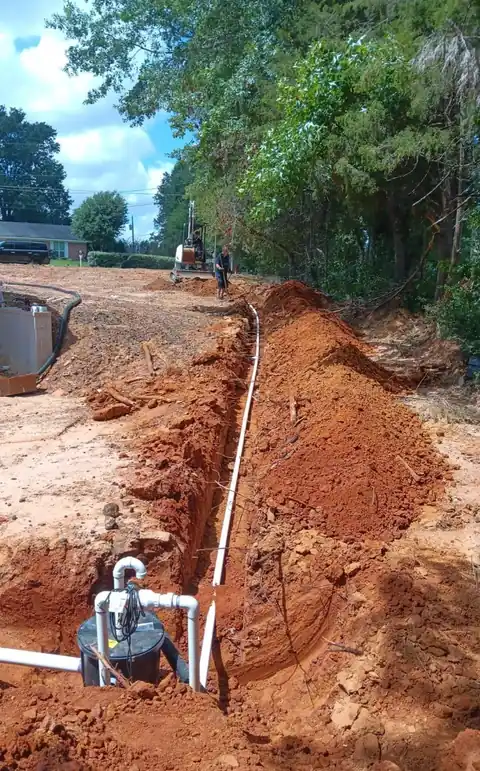
Your sewer line is the one pipe on your property you never see and rarely think about. It runs from the house out to the main or the septic system, buried in the ground, quietly doing its job. When it stops doing that job, the first signs are small. A slow drain. A smell you can't place. A patch of lawn that stays wet when it hasn't rained.
Around Tyler and Bullard, those small signs are worth taking seriously. East Texas gives buried pipe a harder life than people expect, and catching a problem early is usually the difference between a straightforward repair and a yard full of trenches.
Why East Texas is hard on buried pipe
Three things do most of the damage here. The first is tree roots. Pine, oak and sweetgum all send roots looking for moisture, and a sewer line is a reliable source of it. Roots find a tiny gap at a joint, slip in, and keep growing until the pipe is partly or fully blocked.
The second is the ground itself. Clay soil swells when it's wet and shrinks when it dries out, and that slow movement pulls on pipes. Joints separate. Sections sag. Over years, a line that was laid straight can develop low spots where waste collects.
The third is weather. A run of heavy rain saturates the soil, shifts the ground and can push groundwater into a cracked line. Add corrosion in older pipe and plain old age, and you have the usual list of causes PrimeTime Plumbing sees on sewer calls: roots, shifting ground, corrosion, heavy rain and aging pipes.
The warning signs worth acting on
No single symptom proves the sewer line is the problem, but a few of them together make a pattern. Here's what to watch for.
- Foul odors indoors or in the yard, especially near a cleanout or a low spot in the lawn
- Slow drains in more than one fixture, not just a single sink
- Gurgling from toilets or drains when water runs somewhere else in the house
- Soggy or unusually green patches in the yard along the path of the line
- Wastewater backing up into the lowest tub, shower or floor drain
- Drains that clear for a day or two and then clog again
One slow bathroom sink is probably a hair clog. But if the kitchen sink, the washing machine and the shower all drag at once, the blockage is likely downstream of all of them, in the main line.
What to do when you notice something
Ease off the water. Every gallon you send down a partly blocked line can end up on your floor, so hold off on laundry and long showers until someone has looked at it. Don't pour harsh drain chemicals into a line you suspect is damaged. They rarely fix a root problem, and they're unpleasant for whoever has to work on the pipe afterward.
Then get a real diagnosis. Guessing is how people end up digging up the wrong stretch of yard, or paying for a drain cleaning that treats the symptom and leaves the cause.
How a plumber finds the problem without digging
The standard tool is a camera inspection. A small high-resolution camera on a flexible cable goes into the line through a cleanout, and the plumber watches the pipe from the inside on a screen. Roots, cracks, offset joints, buildup and sagging sections all show up. It answers the question that matters most, which is where exactly the trouble is and how bad it looks, and it does that without excavation.
From there the options usually fall into a few buckets. If the line is clogged with grease, sludge or debris, hydro jetting uses pressurized water to scour the inside of the pipe clean. If there's a localized crack or leak, a targeted repair may be all you need. If the pipe is too far gone, replacement is on the table, and trenchless methods can often replace or rehabilitate a line with far less digging than the old way.
PrimeTime Plumbing says a full sewer line replacement is typically a one to three day job, and trenchless work often cuts down both the time and the mess. Your own timeline depends on the length of the line, what's above it and what the camera finds.
Inspect before it becomes an emergency
The cheapest sewer repair is the one you do before the backup. PrimeTime's recommendation is a professional inspection every one to two years, and more often for older properties or homes in areas where the soil moves, which describes a good part of Tyler and Bullard. A camera pass takes little time and gives you a baseline. If something changes, you'll know.
If a house has big trees close to the line, an older clay or cast iron pipe, or a history of slow drains, regular inspection pays for itself in avoided surprises. Buying a home is another smart moment for it, since the sewer line is exactly the kind of thing a standard walkthrough never sees.
PrimeTime Plumbing handles sewer line inspection, hydro jet cleaning, repair, replacement and trenchless repair across Bullard, Tyler and the surrounding East Texas towns, and it offers preventive maintenance programs for people who'd rather catch trouble early. If your drains are gurgling or your yard smells wrong, call (903) 707-1503. The line is open 24 hours a day, every day.
PrimeTime Plumbing, (903) 707-1503
Call (903) 707-1503More articles
Tank, Tankless or Hybrid: Choosing a Water Heater for Your House
The right water heater depends on your fuel, your household and your space, not on whichever type is trending.
What to Do in the First 10 Minutes of a Plumbing Emergency
A calm, ordered response in the first ten minutes can keep a bad day from becoming an expensive one.