PrimeTime Plumbing · Sewer lines
Sewer line inspection, repair and replacement in Tyler, TX
Camera inspection, hydro jetting, repair, trenchless repair and full replacement for homes and businesses across Tyler, Bullard and East Texas.
Chapter 01
Tree roots, shifting clay and old pipe: how sewer lines fail here
Sewer lines tend to fail slowly and then all at once. The usual causes around Tyler and Bullard are tree roots working into the joints, ground shifting around the pipe, corrosion, heavy rainfall saturating the soil, and plain aging pipe. East Texas soil moves, and the line underneath feels every inch of it.
By the time wastewater backs up into a sink, tub or toilet, the damage underground has usually been building for a while. A blocked or damaged line can push contaminated water into the house, which is why a gurgling drain deserves more than a plunger.
The same failures show up in commercial buildings, only with more at stake. A residential backup is a mess in the house. A collapsed commercial line can stop a business for the day, so the inspection schedule matters at both scales.
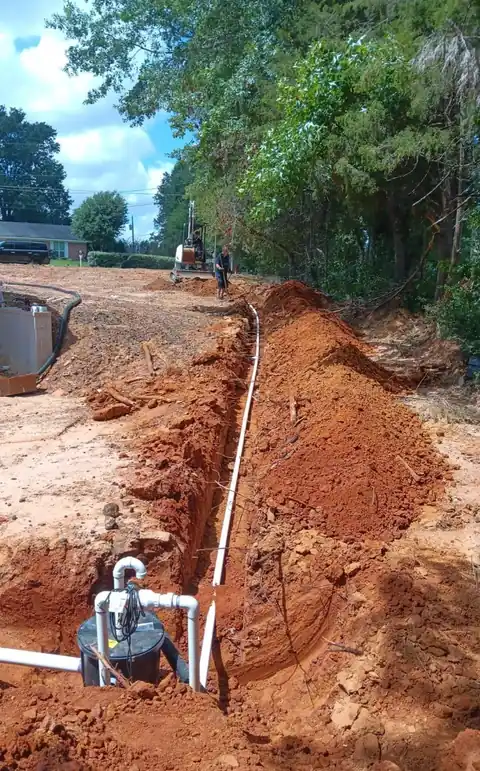
Long trench with a new white sewer line and a cleanout in red East Texas clay
Camera first, then the fix: jetting, repair, trenchless and replacement
We put a high-resolution camera down the line before anyone digs. It shows blockages, cracks and root intrusion exactly where they sit, so the repair plan is built on what is in the pipe and not on a guess.
Hydro jetting clears grease, sludge and debris and restores flow. Where a section is cracked or leaking, we repair it, and where we can we use trenchless methods that fix buried pipe without tearing up the yard. When repair stops making sense, we replace the line, and most replacements are finished in one to three days.
Trenchless repair is built to last. Modern materials resist corrosion and shifting soil, and the method usually cuts the time and the mess of a traditional dig, which matters when the line runs under a driveway, a patio or a yard you would like to keep.
You get a free, no-obligation estimate, and the price is explained before any work begins.
Chapter 03
Inspect every one to two years and keep the line on a schedule
We recommend a sewer line inspection every one to two years, and sooner in older properties or any neighborhood where the soil keeps moving the pipe. A short camera run catches a problem while it is still a repair and not a replacement.
Preventive maintenance programs put that on a calendar: inspection, cleaning when the line needs it, and a straight answer about what the camera saw. If you smell sewage, see water pooling in the yard or notice slow drainage, use less water and call (903) 707-1503. The phone is answered any hour.
Licensed and insured. Free estimates, open 24 hours, seven days. Call (903) 707-1503.

Follow the line.
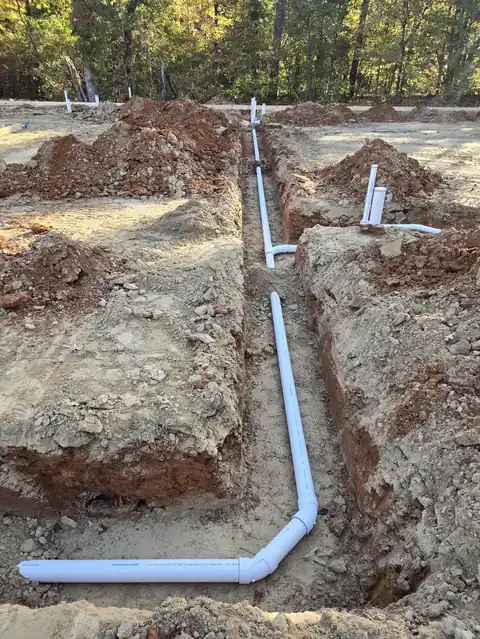
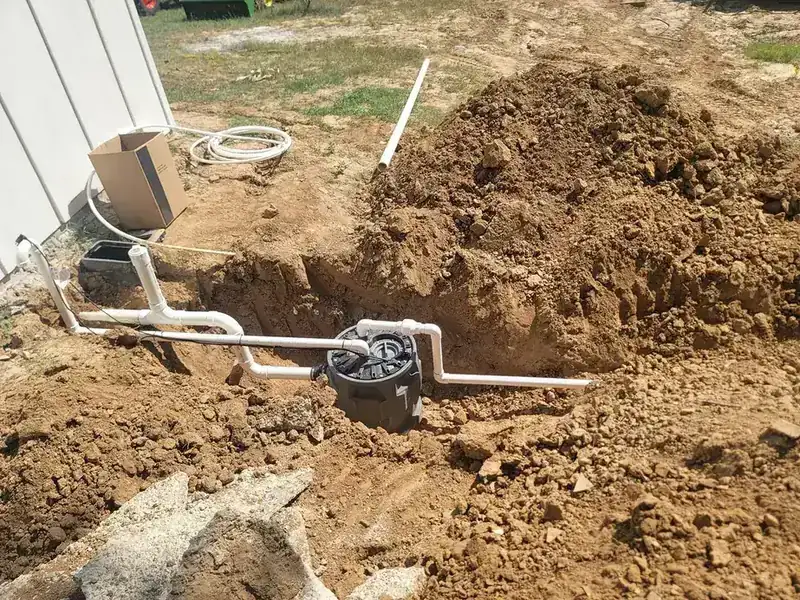
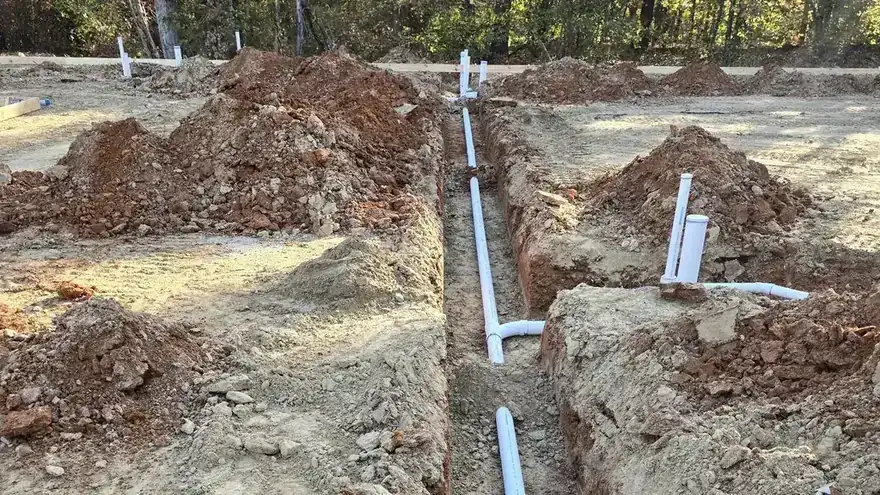
These are PrimeTime trenches in East Texas clay. Scroll sideways along the run and you see the same job from three distances.
Field book
Five signs the line is failing.
Any one of these is reason enough for a camera inspection. Two or more together, call the same day.
- Entry 01
Foul odors
A sewer smell inside the house or out in the yard points to a break or a blockage in the line. The camera shows which.
- Entry 02
Slow drains
Several drains slowing down together is usually the main line talking, not one tired sink.
- Entry 03
Gurgling
Air pushed back through the traps because water is struggling to move down the line.
- Entry 04
Soggy yard patches
Water pooling along the path of the line with no rain to explain it. Use less water and call.
- Entry 05
Backups
Wastewater coming up into sinks, tubs or toilets. Treat it as urgent, because it can carry a health hazard into the house.
Suspect a leak or a break? Stop running extra water, then call. Quick action keeps contamination down and keeps the repair smaller, and a camera on the line tells us what we are dealing with before any digging starts.